ikbalhossen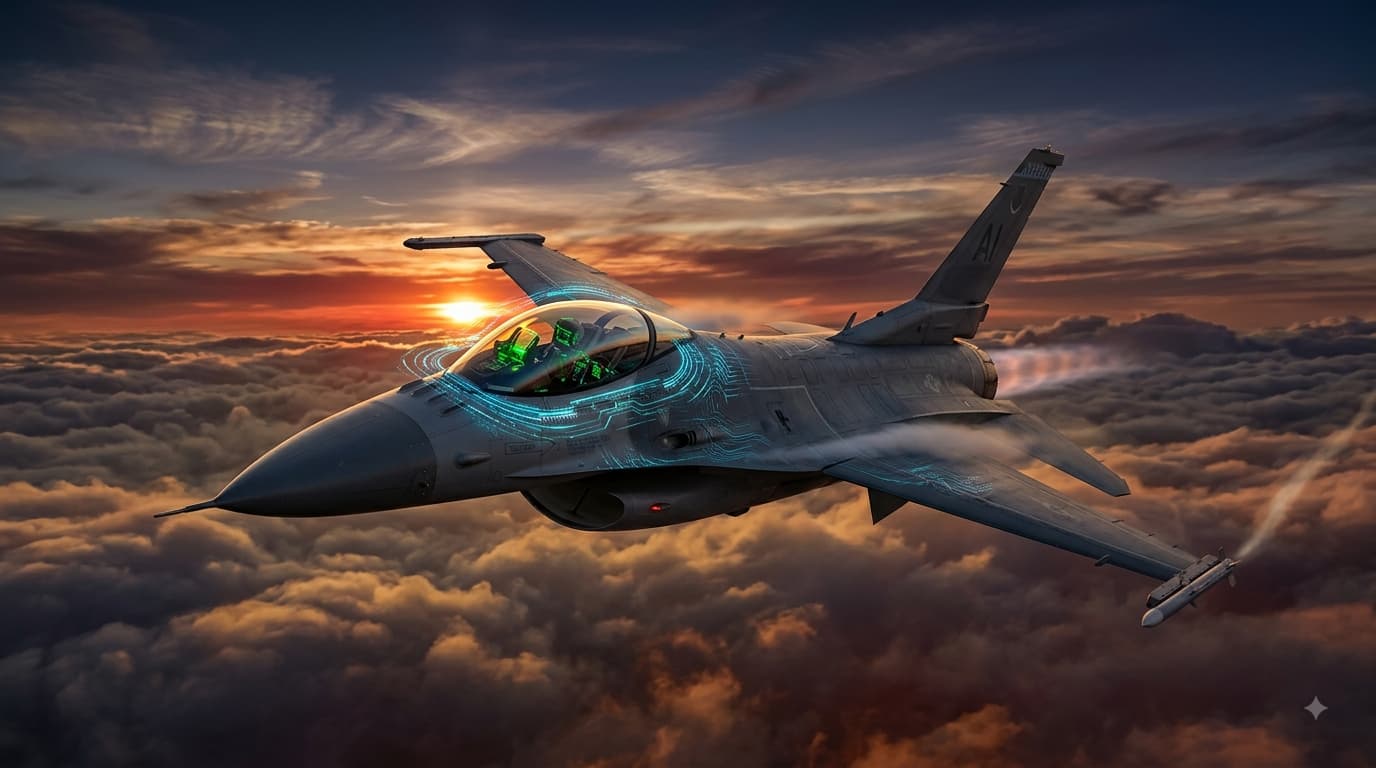
We’ve seen it countless times in science fiction movies — artificial intelligence piloting fighter jets in high-stakes combat scenarios. In August 2026, that fictional scenario became reality. The United States military successfully completed the first real-world flight of an F-16 fighter jet fully controlled by artificial intelligence — and the achievement has ignited intense discussion among defense analysts and technology experts worldwide.
What Actually Happened
The U.S. Defense Advanced Research Projects Agency (DARPA) successfully completed a historic test flight: an F-16 fighter jet, fully controlled by an AI system, flew in real-world conditions without any human pilot intervention.
This marks the first time an aircraft of this caliber — a jet typically flown only by highly trained, experienced pilots — has been entirely controlled by an AI system during an actual flight, not just in simulation.
Why This Is Such a Big Deal
Until now, most conversations about autonomous flight centered on drones — unmanned aerial vehicles that are typically smaller, simpler, and used for surveillance or limited strike missions.
The F-16 represents an entirely different category of complexity. It:
Flies at extremely high speeds
Requires split-second tactical decision-making
Must respond instantly to rapidly changing conditions
Has historically only been flown by pilots with years of specialized training
Successfully handing full control of an aircraft this sophisticated to an AI system demonstrates that artificial intelligence has reached a stage where it can make complex, high-stakes decisions in real time — under conditions where a single miscalculation could be catastrophic.
How Is This Technologically Possible?
Behind this achievement lies a combination of advanced sensor technology, real-time data processing, and sophisticated machine learning models. The AI system continuously analyzes the aircraft’s surroundings — speed, altitude, wind conditions, nearby obstacles — and makes flight control decisions in fractions of a second.
This capability is built on years of simulation-based training, where the AI model logged thousands of hours in virtual flight environments, practicing emergency scenarios and complex maneuvers long before ever being tested in a real aircraft.
Is This Just a Military Story?
It’s tempting to assume this only matters to defense officials and the military. But the implications reach further than that, for several reasons.
- Impact on Civilian Aviation
Technology developed for military applications frequently finds its way into civilian use over time. Autonomous flight systems refined for fighter jets could eventually influence how passenger and cargo aircraft are designed and operated in the future. - Questions of Safety and Ethics
When a fighter jet is fully controlled by AI, important questions emerge: who is accountable for its decisions? If something goes wrong, where does responsibility lie? These aren’t just technical questions — they carry serious ethical and legal weight. - Global Defense Competition
As the United States demonstrates progress in this area, other major powers are likely to accelerate their own efforts in the same direction. This could mark the beginning of a new technological arms race with significant implications for global security dynamics.
Weighing the Benefits and the Risks
Like every transformative technology, this breakthrough comes with real trade-offs.
Potential Benefits:
High-risk missions could be carried out without putting human pilots’ lives in danger
AI reaction times can be significantly faster than human reflexes, which could matter in critical situations
AI systems don’t experience fatigue during long-duration missions, unlike human pilots
Potential Concerns:
Autonomous weapons systems raise complex ethical and legal questions that international law hasn’t fully addressed
Removing human judgment from split-second combat decisions is a significant departure from current norms
The risk of these systems being hacked, manipulated, or malfunctioning carries serious consequences
Existing international arms control agreements and regulatory frameworks weren’t designed with fully autonomous combat aircraft in mind
What Experts Are Saying
Many defense analysts view this as an early signal of a major shift in military strategy over the coming decade. At the same time, most experts caution that this technology should be implemented gradually and carefully, with robust safeguards, until it can be fully trusted and properly regulated.
International relations experts have also noted that advances like this could shift the global balance of power, creating an urgent need for new diplomatic discussions and updated international regulations around autonomous weapons systems.
What This Means for Ordinary People
This development is a clear signal that AI technology is no longer confined to chatbots on our phones or image generators on our computers. It’s now entering some of the most complex, high-stakes domains in the real world.
Looking ahead, we’re likely to see AI take on more complex, high-stakes decision-making roles — not just in defense, but across healthcare, transportation, and other critical sectors where split-second decisions matter.
Final Thoughts
The successful AI-controlled flight of an F-16 isn’t just a technical achievement — it offers a glimpse into a future where artificial intelligence works alongside, and sometimes in place of, humans in some of the most demanding roles imaginable.
As exciting as this progress is, it’s also a reminder that with great technological power comes an equally great responsibility to think carefully about oversight, accountability, and ethics. How this technology is ultimately deployed and governed will determine whether it proves to be a tremendous benefit to humanity — or a serious source of risk.
This article is based on recent technology and defense news reports. Given the sensitive nature of military and defense technology, readers are encouraged to follow established, reputable news sources for the most current and verified information.