ikbalhossen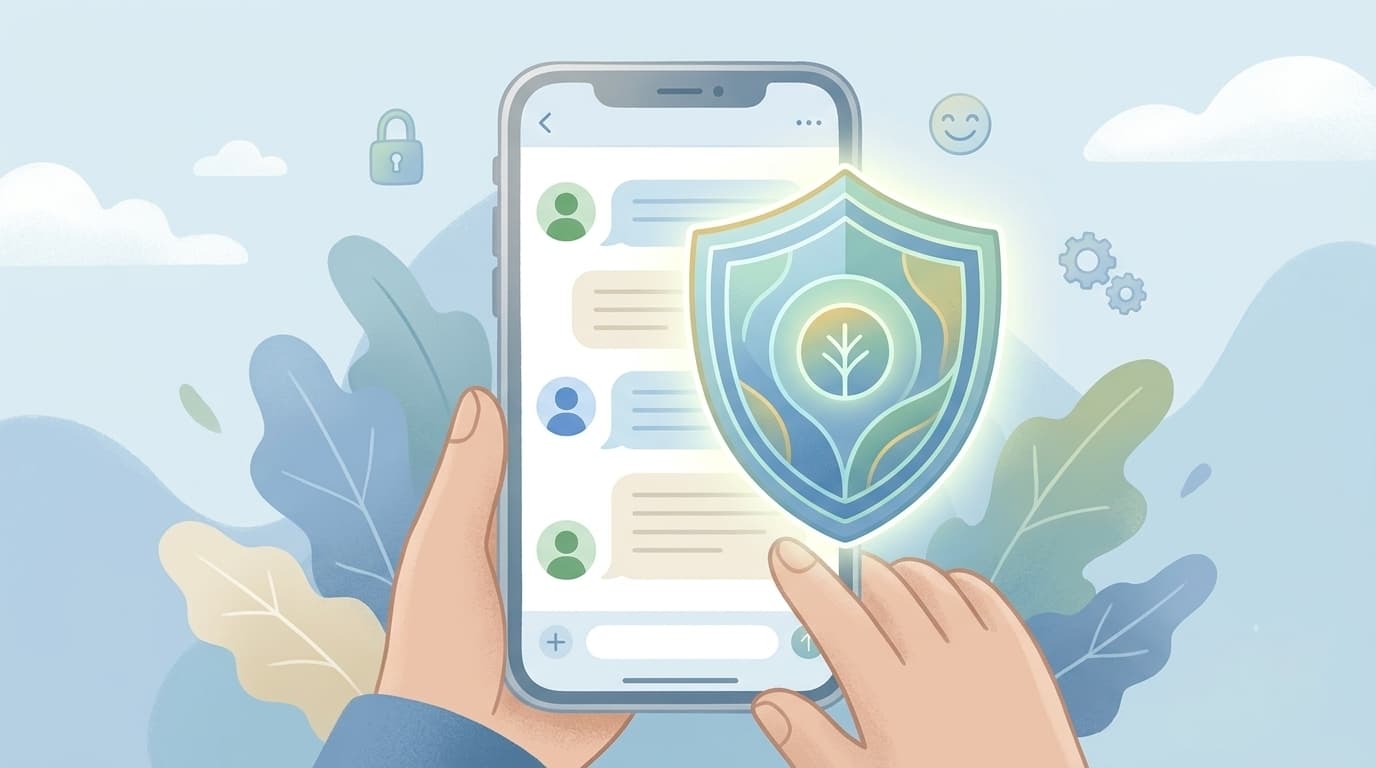

Teen safe ChatGPT interface showing parental controls on smartphone✏️ How Does the New Teen Safe ChatGPT Work?
OpenAI launched a teen-tailored version of ChatGPT for users between the ages of 13 and 17, and the changes go well beyond simple content filtering. The new mode is specifically designed to block conversations involving suicide, self-harm, and romantic or sexual content — topics where an AI’s response can have serious real-world consequences for a young, vulnerable user.
Perhaps the most technically significant piece of this rollout is the age-prediction system OpenAI is using to automatically route minors into this safer mode, rather than relying solely on users honestly self-reporting their age during sign-up — a system that has historically been easy for teens to bypass simply by entering a false birthdate.
Why Age-Prediction Technology Matters Here
For years, the standard approach to protecting minors online has been asking users to self-report their age, a system that is trivially easy to circumvent and provides essentially no real protection. A 14-year-old wanting to access an adult-oriented service simply has to enter a different birth year.
Age-prediction technology takes a fundamentally different approach, analyzing patterns in how an account is used to estimate whether the user is likely a minor, regardless of what birthdate was entered during sign-up. This isn’t a perfect system, and it raises its own set of questions about accuracy and privacy, but it represents a meaningful shift from a purely honor-system approach toward something that attempts to catch cases where a teen has misrepresented their age.
The Parental Controls Built Into the New System
Beyond simply restricting certain conversation topics, OpenAI’s teen version includes features specifically designed to give parents visibility and control:
Quiet hours — Parents can set specific times during which the teen’s access to ChatGPT is restricted, similar to screen time controls already common on smartphones and gaming consoles.
High-risk safety notifications — Perhaps the most significant feature, parents can receive alerts when the system detects signals suggesting their teen may be in a high-risk situation, giving parents a chance to check in during moments that matter most.
A built-in study mode — The teen version includes features designed to nudge students toward productive study habits rather than simply providing direct answers to homework questions, addressing a separate but related concern many parents and educators have raised about AI’s impact on learning.
Why This Matters Beyond OpenAI
This launch is significant not just because of what it does for ChatGPT specifically, but because of what it signals for the broader AI industry. As AI chatbots have scaled to reach hundreds of millions of users — including a large and rapidly growing number of teenagers — the conversation around AI safety has increasingly shifted from abstract, long-term concerns about advanced AI systems toward immediate, practical questions about how these tools affect vulnerable users right now.
Mental health researchers and child safety advocates have raised concerns for some time about AI chatbots being used by teens during moments of genuine crisis, sometimes as a substitute for reaching out to a trusted adult or professional resource. A dedicated teen mode that actively blocks self-harm-related conversations and instead should redirect toward appropriate support resources represents a direct, practical response to those concerns, rather than a purely theoretical safety measure.
What This Means If You’re a Parent
If your teenager already uses ChatGPT, or is likely to given how widespread AI chatbot use has become among young people, here are practical steps worth taking:
Check whether the teen mode is active on your child’s account. Given the age-prediction system, this may already be applied automatically, but it’s worth verifying directly through account settings rather than assuming.
Set up quiet hours if that fits your family’s routine. This is a straightforward, low-effort way to establish reasonable boundaries around AI chatbot use, similar to other screen time controls you may already use.
Have an honest conversation with your teen about AI limitations. Even with safety features in place, it’s worth talking directly with your child about the fact that AI chatbots are not a substitute for talking to a trusted adult, counselor, or crisis resource during moments of genuine distress.
Don’t treat this as a complete solution. No safety system is perfect, and determined teens may find ways around restrictions, just as they have with other parental control systems. These features are a meaningful layer of protection, not a replacement for ongoing conversations about mental health and online safety.
A Broader Industry Trend Worth Watching
This move by OpenAI doesn’t exist in isolation. It reflects a broader pattern across the AI industry in 2026: companies are increasingly building safety and age-appropriate features directly into their products rather than treating them as an afterthought, partly in response to genuine ethical concerns and partly in response to intensifying regulatory pressure around AI transparency and accountability.
Given how quickly AI chatbots have become part of daily life for young people, it’s reasonable to expect other major AI companies to introduce similar age-specific safety features if they haven’t already, particularly as parents, educators, and regulators continue paying closer attention to how these tools affect younger users specifically.
The Bigger Picture: AI Companies Taking Youth Safety More Seriously
For years, one of the most common criticisms of the tech industry generally has been a pattern of building products first and addressing safety concerns for vulnerable users only after problems become publicly visible. This teen-specific ChatGPT rollout, with its proactive age-detection system and built-in crisis-topic restrictions, represents a notable example of a major AI company building youth safety considerations directly into a core product rather than adding them reactively after incidents occur.
Whether this approach proves genuinely effective at protecting vulnerable teens will depend heavily on execution — how accurately the age-detection system works in practice, how well the crisis-topic blocking actually redirects teens toward genuine help, and whether parents actually engage with the notification and control features being offered. But as a starting point, it’s a meaningfully more proactive stance than the industry has generally taken on this issue in the past.
Final Thoughts
As AI chatbots continue becoming an ordinary part of how teenagers communicate, learn, and process difficult emotions, this kind of dedicated safety infrastructure is likely to become an industry standard rather than a differentiating feature. For parents, this launch is worth treating as a prompt to have a direct conversation with your teen about how they’re using AI tools, rather than assuming built-in safety features alone will handle everything.
The technology is genuinely trying to address a real and serious concern here. But as with most safety features in any technology teens use, its real-world effectiveness will depend as much on family communication and awareness as it does on the underlying system itself.
This article is based on recent AI industry news as of August 2026. If you or someone you know is experiencing a mental health crisis, please reach out to a trusted adult, mental health professional, or local crisis support service.
Read more: Mobile vs Laptop Guide | AI Memory Breakthrough📚 Continue Reading:
• Mobile vs Laptop in 2026• AI Models Memory
• New AI Laws EU California
About Our Team