ikbalhossen
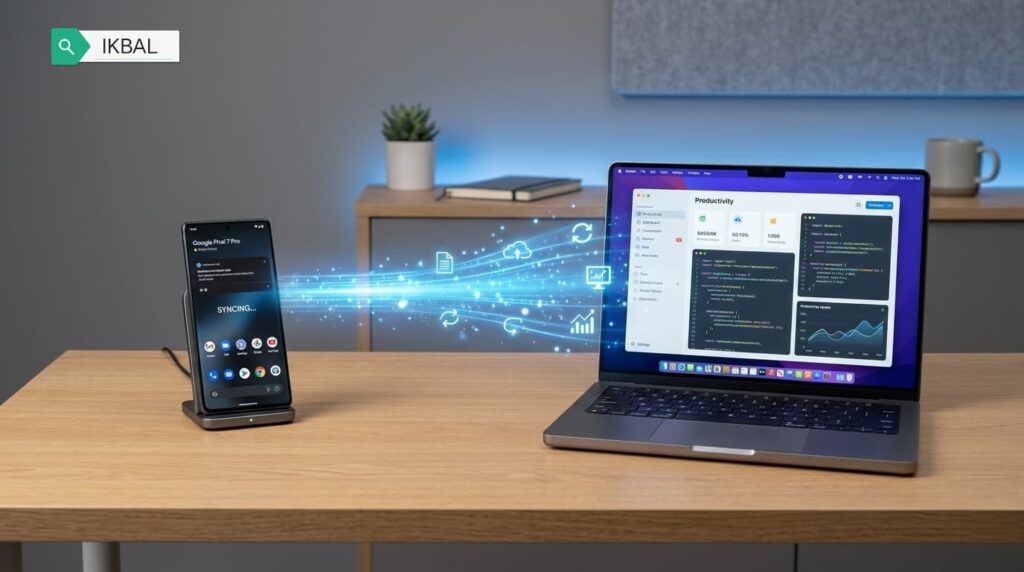
It’s one of the most common tech questions people search for every single year: do I really need a laptop, or can my phone handle everything now? In 2026, phones are more powerful than ever, and laptops have gotten smarter too — so the honest answer isn’t a simple “one wins.” It depends heavily on what you actually do with your device day to day. Here’s a clear, practical breakdown to help you decide.
The Old Divide Has Blurred, But It Hasn’t Disappeared
A few years ago, this comparison was fairly straightforward: phones were for quick tasks and entertainment, laptops were for real work. That line has gotten considerably blurrier in 2026. Modern smartphones now handle document editing, video calls, cloud-based collaboration, and even light content creation impressively well. At the same time, laptops have become more portable, more power-efficient, and increasingly AI-capable, narrowing some of the gaps that used to make phones the clear choice for pure convenience.
That said, the underlying distinction between mobility and productivity power still holds true at its core: phones remain the better choice for quick, on-the-go tasks, while laptops still win decisively for heavy work, multitasking, and complex productivity.
Where Mobile Phones Genuinely Win
Portability and convenience. This is the most obvious advantage, but it’s worth stating clearly: nothing beats a phone for tasks you need to handle in the moment, wherever you are. Checking email, responding to messages, quick research, banking, navigation — phones are simply built for this kind of fast, on-the-go interaction.
Casual productivity is genuinely capable now. For lighter work — writing shorter documents, editing photos, managing schedules, joining video calls — modern phones handle these tasks smoothly. Cloud-based apps mean you’re often working with the same tools and files whether you’re on your phone or laptop, which has meaningfully closed the productivity gap for everyday tasks.
Battery life and always-on convenience. Phones are designed to be with you constantly, charging opportunistically throughout the day, without the deliberate “sit down and open my laptop” moment that laptop use still typically requires.
Better for casual mobile gaming and quick entertainment. For quick gaming sessions, streaming, and content consumption on the move, phones are purpose-built and genuinely excellent.
Where Laptops Still Clearly Win
Heavy multitasking and complex workflows. If your work involves juggling multiple applications simultaneously — spreadsheets, design software, multiple browser tabs, video editing timelines — laptops remain dramatically better suited to this kind of demanding, layered work.
Serious content creation. Video editing, graphic design, software development, and any work requiring specialized professional software still runs far more capably on a laptop. The processing power, screen real estate, and precision input (a real keyboard and trackpad or mouse) make a substantial difference for serious creative or technical work.
Extended writing and formatting-heavy work. Writing longer documents with complex formatting, tables, and attachments is still a genuinely different experience on a laptop. A physical keyboard remains faster and more accurate than touchscreen typing for extended writing sessions, and managing formatting-heavy documents is considerably easier with a full-sized screen and precise cursor control.
Serious gaming. If gaming matters to you beyond casual mobile titles, laptops (and desktops) remain essential. Mainstream, graphically demanding gaming still centers heavily on dedicated hardware that phones simply can’t replicate, regardless of how powerful mobile chips have become.
Multiple device connections. Laptops can connect to printers, external monitors, hard drives, and other peripherals simultaneously in ways phones generally cannot match, which matters considerably for office and professional environments.
The Real Question: What Does Your Actual Day Look Like?
Rather than asking “which device is better” in the abstract, the more useful question is: what does your actual daily workflow require? Here’s a practical breakdown by common use cases.
If you’re a student:
For note-taking, research, quick assignments, and communication, a phone (or a tablet with keyboard accessories) can genuinely handle a lot of your daily academic needs. However, for longer essays, research papers requiring multiple open sources, and any coding or specialized software coursework, a laptop remains the more reliable and efficient choice.
If you’re a remote or hybrid worker:
This depends heavily on your specific role. If your work is primarily communication-based — emails, messaging, scheduling, quick approvals — a phone can cover a surprising amount of your day. But if your role involves spreadsheets, presentations, design work, or managing multiple projects simultaneously, a laptop remains close to essential for maintaining real productivity.
If you’re a content creator or freelancer:
For quick social media content, basic photo editing, and communicating with clients, phones now handle a meaningful share of the workload. But for serious video editing, graphic design work, or managing complex client projects, laptop-level processing power and screen space are still difficult to replace.
If you’re primarily using a device for entertainment and casual browsing:
Honestly, for many people in this category, a phone alone may be entirely sufficient for day-to-day needs, with a laptop reserved for occasional heavier tasks.
What About Tablets as a Middle Ground?
It’s worth briefly addressing the increasingly popular middle option: tablets. Usability, not raw performance, has become the biggest shift in the tablet conversation. Modern tablets paired with keyboard and stylus accessories can recreate a surprisingly laptop-like experience for many everyday productivity tasks, while retaining much of a phone’s portability advantage.
For people who mostly need document editing, note-taking, and light multitasking, a well-equipped tablet can genuinely serve as a middle ground between phone convenience and laptop capability. However, for heavy multitasking, professional software, and serious content creation, laptops still maintain a clear and meaningful edge over tablets, just as they do over phones.
A Practical Framework for Deciding
List your three most time-consuming digital tasks in a typical week. Are they communication-heavy (messaging, calls, quick browsing) or output-heavy (documents, editing, complex software)?
Consider how often you truly multitask across several applications at once. Frequent, complex multitasking strongly favors a laptop.
Factor in how much you’re on the move during your working hours. If you’re rarely at a fixed location, mobile-first workflows become more valuable, even if it means occasionally sacrificing some productivity depth.
Be honest about typing volume. If you’re regularly writing lengthy content, a physical keyboard will save you significant time and frustration compared to touchscreen typing.
For most people whose lives involve both quick, on-the-go tasks and periods of focused, complex work, the realistic answer isn’t choosing one device exclusively — it’s using each device for what it does best, letting your phone handle immediacy and convenience while your laptop handles depth and complexity.
Final Verdict
In 2026, the mobile versus laptop debate doesn’t have a universal winner, and treating it as a binary choice misses the more useful, practical answer. Phones have become remarkably capable for quick, everyday tasks and casual productivity, closing a gap that used to be much wider. But for anything requiring serious multitasking, complex software, extended writing, or professional-grade content creation, laptops remain the clearly superior tool.
The smartest approach for most people isn’t picking a side — it’s understanding which specific tasks in your day genuinely need laptop-level power, and letting your phone comfortably handle the rest.
This article is based on publicly available technology comparisons and industry reports as of August 2026. Device capabilities continue to evolve rapidly; readers are encouraged to evaluate current specifications for specific models before making purchasing decisions.