ikbalhossen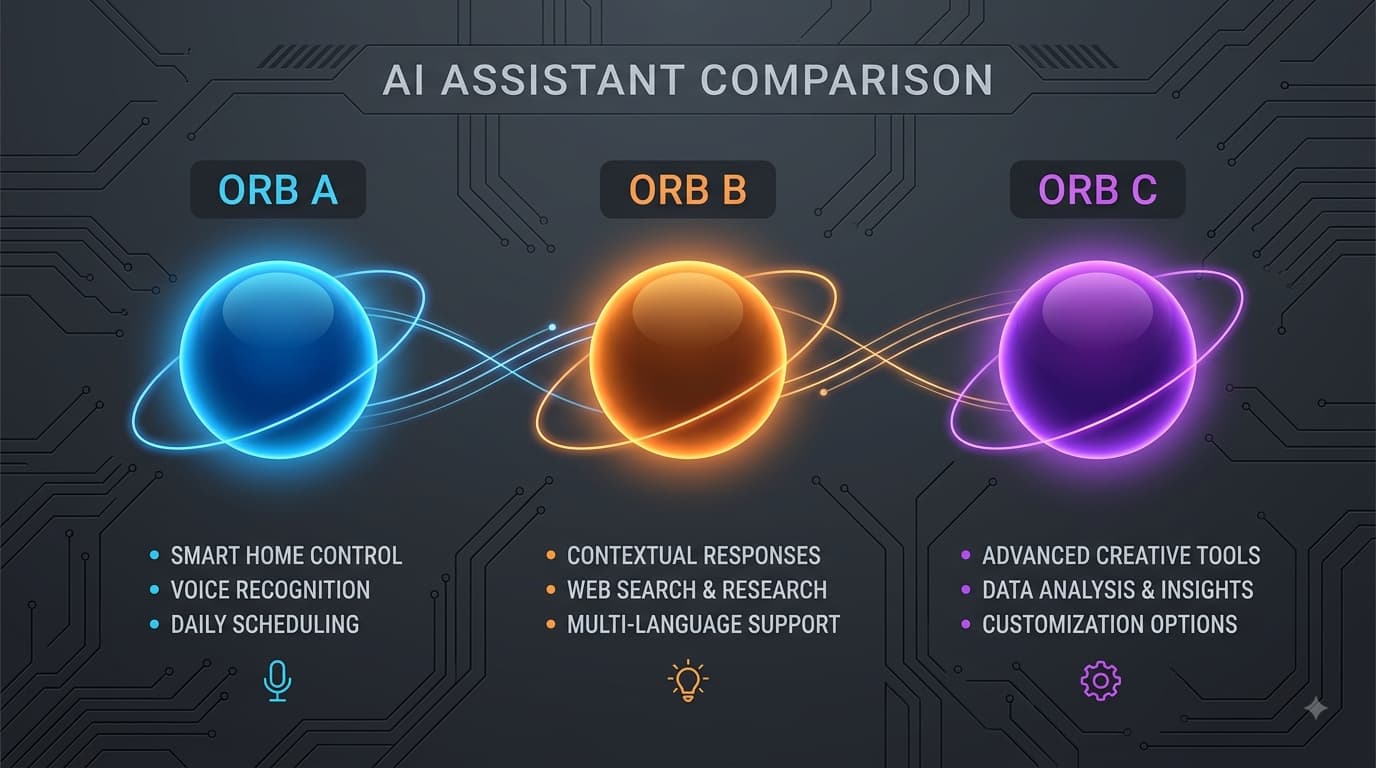
If you’ve tried to pick an AI chatbot lately, you’ve probably felt overwhelmed. New models seem to launch every other week, each one claiming to be “the best.” So which one actually deserves your time and money in August 2026? We tested the claims, dug through the latest benchmarks, and broke down exactly which AI tool wins for which job — no marketing fluff, just what actually matters for real users.
There Is No Single “Best” AI Anymore
Here’s the truth nobody wants to admit: there is no single best AI model right now, and anyone claiming otherwise is probably trying to sell you something. The AI landscape in August 2026 has matured into something closer to choosing a car — you don’t ask “what’s the best car,” you ask “what’s the best car for my needs.”
That said, some clear patterns have emerged. According to recent benchmark data, GPT-5.6 Sol currently leads the overall performance charts, sitting just ahead of Claude Opus 5 and Claude Fable 5. But “leading the overall charts” doesn’t automatically mean it’s the right pick for you.
The Quick Answer (If You’re in a Hurry)
Best all-round quality: GPT-5.6 Sol or Claude Opus 5
Best for coding and building software: Claude Opus 5
Best for deep reasoning and research: Gemini 3.1 Pro
Best value for money: GPT-5.6 Luna or open-source options
Best for open-weight/self-hosting: Kimi K3 or DeepSeek V4
Now let’s break down why.
Why Claude Dominates Coding Right Now
If you’re a developer or you’re building software with AI assistance, the data is remarkably consistent: Claude has quietly taken over the coding category almost entirely. Claude Opus 5 recently claimed the top spot on both of the major vote-based coding leaderboards, and it’s now integrated deeply into popular coding tools.
What’s interesting is that Anthropic has essentially built a two-tier coding strategy. Claude Sonnet 5 handles everyday production coding work reliably and affordably, while Claude Fable 5 (a more advanced tier) gets reserved for the genuinely difficult debugging sessions that would make a cheaper model spin its wheels. If you’re a small team or solo developer, running Sonnet 5 as your default and keeping a more powerful model in reserve for hard problems is a smart, cost-effective approach.
Gemini’s Strength: Reasoning and Research
If your work involves heavy research, long documents, or complex multi-step reasoning, Gemini 3.1 Pro consistently comes out on top in that specific category. Google’s model has built a reputation for handling long-context tasks well — meaning it’s better at keeping track of large amounts of information across a long conversation or document without losing the thread.
For students, researchers, analysts, or anyone doing competitive research and deep-dive analysis, this makes Gemini a genuinely strong pick, even if it doesn’t top every single benchmark.
What About Pricing?
This is where things get genuinely interesting for budget-conscious users. Pricing across the industry has shifted dramatically. OpenAI recently cut prices on its lower tiers significantly, while new entrants like DeepSeek V4-Flash have arrived as serious price-performance options, priced dramatically lower than premium tiers while still delivering solid performance for everyday tasks.
The takeaway: you no longer need to pay premium prices to get a genuinely useful AI assistant. If your use case is straightforward — drafting emails, summarizing text, answering everyday questions — a budget-tier model will likely serve you just fine. Save the premium models for tasks that actually require top-tier reasoning or coding capability.
The Multi-Model Approach: What Smart Teams Are Doing
Here’s a trend worth paying attention to: high-performing teams and power users increasingly don’t rely on just one AI model. Instead, they mix and match based on the task at hand — using one model for content strategy, another for workflow automation, another for high-volume routine tasks, and another for research.
This “best tool for the job” mentality makes sense once you understand that different models genuinely excel at different things. Relying on a single model exclusively can create blind spots in quality, cost efficiency, or capability that a multi-model approach avoids.
Open-Source and Open-Weight Models Are Catching Up Fast
One of the most significant shifts in 2026 has been the rapid improvement of open-weight models — AI models whose underlying parameters are published publicly, allowing developers to run them on their own infrastructure rather than depending on a single company’s API.
Models like Kimi K3 and DeepSeek V4 now compete directly with closed, proprietary systems on several benchmarks, while offering the added benefits of self-hosting, data control, and significantly lower per-token costs. For businesses concerned about data residency, custom fine-tuning needs, or long-term cost control, these open alternatives are increasingly worth serious consideration — not just a fallback option.
How to Actually Choose
Instead of chasing whichever model tops this month’s leaderboard, here’s a more practical framework:
Ask yourself:
What’s my primary use case? (Writing, coding, research, customer support, creative work)
How much am I willing to spend? (Premium quality vs. budget-friendly volume)
Do I need it integrated with existing tools? (Some models integrate more deeply with specific platforms like Microsoft Office or coding environments)
Does data privacy or self-hosting matter to me? (If yes, open-weight models deserve serious consideration)
Once you answer these questions honestly, the “best” model for you becomes much clearer than any generic ranking could tell you.
Final Verdict
In August 2026, the AI chatbot race has evolved past simple “which one is smartest” comparisons. The real question is which model fits your specific workflow, budget, and priorities. For most general users, GPT-5.6 or Claude remain excellent all-round defaults. Developers should strongly consider Claude’s coding-focused tiers. Researchers and students benefit most from Gemini’s reasoning strengths. And if cost or data control is your primary concern, don’t overlook the open-weight options — they’re no longer a compromise, they’re a legitimate competitive choice.
The best advice for 2026: stop looking for one perfect AI assistant, and start building a toolkit of models that each do their specific job well.
This article is based on publicly available AI benchmark data and industry reports as of August 2026. AI model rankings shift frequently as new versions are released, so readers are encouraged to check current benchmarks before making purchasing decisions.